
The Best AI Penetration Testing Tools for 2026
The Best AI Penetration Testing Tools for 2026
What are AI Penetration Testing Tools and Why Do They Matter?
Traditional security testing is often a bottleneck. In the past, you had two choices: run a basic vulnerability scanner that spit out thousands of “informational” alerts (mostly noise), or hire a manual penetration tester who took three weeks to deliver a PDF. AI penetration testing tools have changed that dynamic by introducing “agentic” AI.
Unlike legacy scanners, these tools use reinforcement learning and generative AI to behave like a human hacker. They don’t just look for a missing header; they map your entire attack surface—domains, IPs, cloud assets, and APIs—and then “reason” through how to break them.
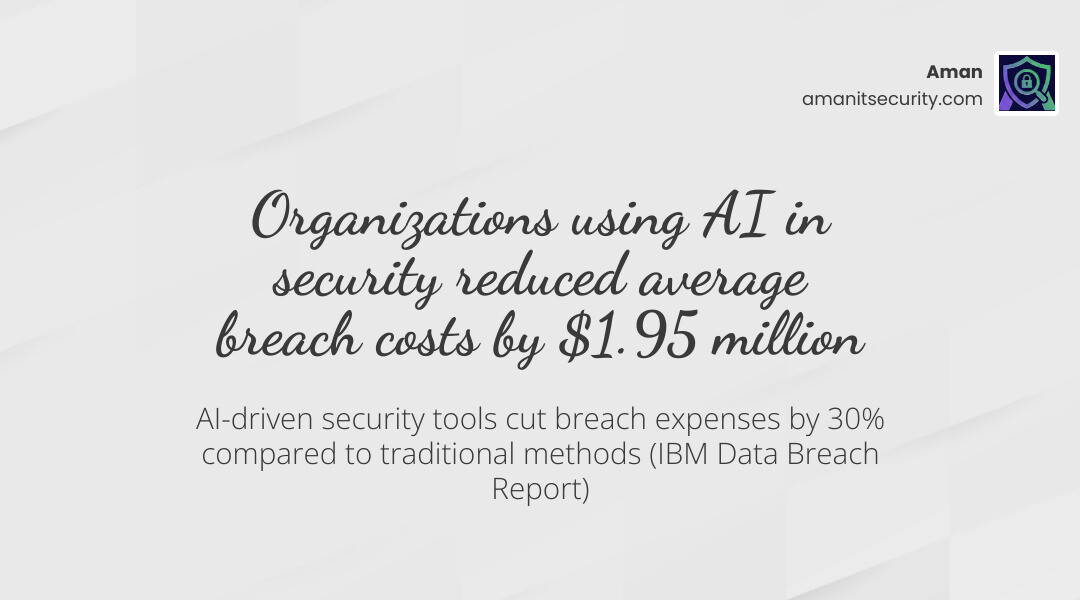
The impact is measurable. IBM’s Cost of a Data Breach Report highlights that organizations leveraging AI and automation in security significantly reduce both the average cost of a breach and the time required to respond to incidents. This is because AI tools excel at finding complex vulnerabilities like business logic flaws, including Broken Object Level Authorization (BOLA) and Insecure Direct Object Reference (IDOR).
At Aman Security, we’ve seen how Web Applications Penetration Testing has evolved. Modern apps require handling MFA, SSO, and rotating tokens—tasks that would choke a traditional scanner but are handled seamlessly by AI agents. With a 97% adoption rate among CISOs and AppSec teams, it’s clear that continuous validation and attack path analysis are no longer optional; they are the new standard for staying ahead of sophisticated threats.

Top 7 AI Pentesting Tools for 2026
Choosing the right tool depends on your stack, your compliance needs, and how much “human” intervention you want in the loop. Some tools are fully autonomous, while others act as a “Co-pilot” for your existing security team.
To help you cut through the marketing fluff, check out our 3 AI Security Audit Tools That Will Not Make You Nap for a deeper dive into the user experience of these platforms.
| Tool | Key Strength | Hosting | Compliance Support |
|---|---|---|---|
| Aman | 50 Comprehensive Scanners | SaaS | Continuous Audit |
| Aikido Security | Low False Positives | SaaS / Multi-region | SOC2, ISO27001, HIPAA |
| PentestGPT | Open-source Flexibility | Self-hosted (Docker) | Community-driven |
| XBOW | Human Augmentation | SaaS | SOC2 |
| Terra Security | Continuous PTaaS | SaaS | SOC2, ISO27001 |
| Hadrian | Attack Surface Mgmt | SaaS | Continuous Audit |
| Cobalt.io | Expert Community | SaaS | SOC2, CREST |
1. Aman: The Most Comprehensive Security Solution
Aman has carved out a massive niche by focusing on what most scanners miss: the “collectivity” of vulnerabilities. Whether you are running a web app or a Git repository, Aman doesn’t just scan endpoints; it understands the logic behind them.
In one notable demonstration of Aman understanding the market, the tool is completely free as the only free security scanner that offers that amount (50) of scanners without cost. This amount of scanners is usually the bread and butter of human testers, yet Aman does it at machine speed.
Aman is loved because it focuses on automated remediation. It doesn’t just tell you that you have a problem; it provides AI remediation steps to fix it. Organizations using Aman have reported reducing the time spent on pentests from 5 days down to less than half a day, all while maintaining a near-zero false positive rate.
2. Aikido Security: All-in-One AI Penetration Testing Tools
With over 50,000 organizations as customers, Aikido Security is a heavyweight in the space. Their secret sauce is “signal over noise.” By using Aikido reachability analysis, the platform can filter out over 85% of false positives. It checks if a vulnerable library is actually reachable and exploitable in your specific environment before alerting you.
Aikido offers a developer-first UX that integrates directly into your workflow. It provides:
- End-to-end attack path analysis: Simulating how an attacker moves from a leaked secret to a database breach.
- Audit-ready reports: Generating SOC2 and ISO27001 compliant dossiers in hours.
- Massive Scale: Trusted by over 100,000 developers to secure code, cloud, and runtime environments.
3. PentestGPT: The Open-Source Autonomous Agent
For teams that prefer the “DIY” or open-source route, PentestGPT is the gold standard. Originally presented as a PentestGPT Research Paper at USENIX Security 2024, this tool uses a reasoning-generation-parsing loop to conduct autonomous testing.
In benchmarks, PentestGPT achieved an impressive 86.5% success rate on the XBOW validation suite. It’s built to be Docker-first, meaning you can get it running in minutes with your own LLM API keys (like Claude or GPT-4). One of its best features is session persistence—if the tool hits a wall or you need to pause, it saves the state of the “hack” so you can resume later without losing progress.
4. XBOW: Amplifying Human Expertise
XBOW takes a slightly different philosophical approach. Instead of trying to replace the human, it aims to “amplify” them. XBOW automates the boring, repetitive parts of a pentest—reconnaissance, initial fuzzing, and basic validation—so that your senior security researchers can focus on high-level judgment and complex remediation.
It acts as a force multiplier. By handling the routine exploration, XBOW allows a small security team to provide the same level of coverage as a much larger department. It’s particularly effective for organizations that already have an internal red team but need to scale their efforts across hundreds of microservices.
5. Terra Security: Continuous Agentic-AI PTaaS
Terra Security offers a “Penetration Testing as a Service” (PTaaS) model powered by agentic AI. According to customer reviews on the AWS Marketplace, the platform feels like having a “real security researcher reviewing the app continuously.”
Terra specializes in web-app security, providing a deep, continuous review rather than a one-time snapshot. This is critical in a DevSecOps world where code changes daily. If a new vulnerability is introduced in a Tuesday afternoon deploy, Terra’s AI agents are likely to find it by Wednesday morning, rather than waiting for next year’s scheduled manual test.
6. Hadrian: Real-Time Attack Surface Management
Hadrian is all about the “outside-in” view. It focuses on real-time visibility of your digital risks. As one Hadrian user noted on G2, the tool provides insights that teams usually have to wait weeks for during a manual pentest.
Hadrian is event-driven. This means if you spin up a new S3 bucket or a new subdomain, Hadrian automatically triggers a scan. It’s designed to be a daily part of your workflow, providing a constant stream of risk data that integrates directly into your existing security stack.
7. Cobalt.io: Hybrid AI and Human Pentesting
Cobalt.io pioneered the PTaaS movement and remains a leader by blending AI with its “Cobalt Core”—a community of vetted security experts. While they use automated tools to map attack surfaces, the final validation often involves a human touch.
Reviews on G2 highlight Cobalt’s balance of speed and expertise. Their platform makes it easy to track findings and communicate directly with testers. For organizations that need a “human-certified” report for a specific enterprise deal or regulatory requirement, Cobalt’s hybrid approach is often the perfect middle ground.
How to Evaluate and Integrate AI Pentesting Tools
Selecting a tool is only half the battle; the other half is making sure it doesn’t drive your developers crazy with false alerts. When evaluating ai penetration testing tools, we recommend focusing on these four criteria:
- Business Logic Detection: Can the tool find an IDOR or BOLA flaw? If it only finds outdated versions of Apache, it’s just a fancy scanner, not a pentesting tool.
- False Positive Rates: Look for tools that offer “reachability analysis” or “exploit validation.” You want a tool that only alerts you when a bug is actually exploitable.
- Integrations: Security happens where the developers live. Ensure the tool has robust Jira, Slack, and GitHub/GitLab integrations. For more on this, see The Ultimate Guide to Choosing an AI SAST Analysis Tool.
- Data Residency: Especially for our friends in regulated industries, check where the AI processes your data. Many top tools now offer multi-region hosting to comply with GDPR or local privacy laws.
Pro Tip: Start small. Integrate the tool into a single staging pipeline first. Once you’ve tuned the noise levels, roll it out to production-facing assets.
Frequently Asked Questions
AI Penetration Testing Tools: Top 3 Questions
- Is my data safe with these AI models? Most enterprise AI pentesting tools use “zero-retention” APIs or private instances of LLMs. This means your proprietary code isn’t used to train the public model. Always check for SOC2 Type II or ISO 27001 certifications.
- Do these tools work on internal networks? Yes. Many offer “on-prem” runners or Docker containers that can sit inside your VPC and report findings back to a central dashboard.
- What about compliance? Tools like Escape and Aikido generate reports specifically mapped to frameworks like PCI-DSS, HIPAA, and SOC2, making your next audit much less painful.
Can AI pentesting tools fully replace human pentesters?
Not entirely—at least not yet. While AI handles the “grunt work” (recon, fuzzing, known exploit chaining) with 80x more efficiency, human pentesters are still superior at understanding extremely complex, multi-step business logic that requires “intuition.” Think of AI as the ultimate power tool; it makes the carpenter faster, but you still need the carpenter for the custom design.
What is the difference between DAST and AI pentesting?
Traditional DAST (Dynamic Application Security Testing) is like a robot hitting a wall with a hammer in the same five spots every time. It’s predictable and “dumb.” AI penetration testing tools are “context-aware.” They understand user flows, adapt their attacks based on the responses they get, and can chain together minor issues to create a major exploit—mimicking the creativity of a human attacker.
Conclusion: The Future of Offensive Security
The era of the “once-a-year” pentest is dead. In 2026, if you aren’t testing your security every time you push code, you’re leaving the door wide open. At Aman Security, we believe in making this transition as painless as possible. Whether you’re looking for How to Implement SAST for Mobile Apps Without Losing Your Mind or need a full autonomous audit, the tools are finally here to help.
The industry is moving toward a future where 9 out of 10 professionals believe AI will dominate the offensive security landscape. By adopting these tools today, you aren’t just checking a compliance box; you’re building a continuous, resilient defense that scales as fast as your business.
Ready to see how AI can transform your security posture? Aman Security offers blazing-fast, comprehensive scans with instant AI explanations to get you started. Stay safe out there!
Secure Your Apps with Aman
Put these mitigation steps into practice. Get professional-grade vulnerability detection in one place.
Launch Your First Scan Now