
The Ultimate API Pentesting Tools Roundup
The Ultimate API Pentesting Tools Roundup
Why API Pentesting Tools Are Essential for Modern Application Security
API pentesting tools are specialized software used to find and exploit security vulnerabilities in APIs before attackers do. Here are the most widely used options:
| Tool | Type | Best For |
|---|---|---|
| Burp Suite | Commercial/Free | Intercepting & manipulating API traffic |
| OWASP ZAP | Open-source | Automated DAST scanning |
| Postman | Free/Commercial | API request building & basic testing |
| Metasploit | Open-source | Exploit-based testing (1,600+ exploits) |
| Snyk API & Web | Commercial | Dev-first DAST with 0.08% false positive rate |
| 42Crunch | Commercial | Full lifecycle API security |
| Arjun | Open-source | API endpoint & parameter discovery |
| SoapUI | Free/Commercial | SOAP and REST API testing |
APIs now power nearly every modern application — from mobile apps to single-page applications to cloud infrastructure. That makes them one of the most targeted attack surfaces in existence. Gartner has warned that API security must be a CISO-level priority, and IBM’s Cost of a Data Breach Report ranks API vulnerabilities among the most expensive to fix.
The problem isn’t just known APIs. Organizations also face risk from shadow APIs — undocumented or forgotten endpoints that never get tested and sit wide open to attackers.
A solid API pentesting strategy combines:
- Inventory — knowing every API endpoint, including shadow APIs
- Testing — actively probing for vulnerabilities like broken authentication, BOLA, and injection flaws
- Continuous monitoring — integrating security checks into your CI/CD pipeline
I’m Zezo Hafez, an AWS and Azure certified IT Manager with over 15 years of web development experience, and I’ve worked hands-on with API pentesting tools across complex multi-cloud environments. In this roundup, I’ll walk you through everything you need to pick the right tools for your stack.
The Evolution of API Pentesting Tools in Modern Security
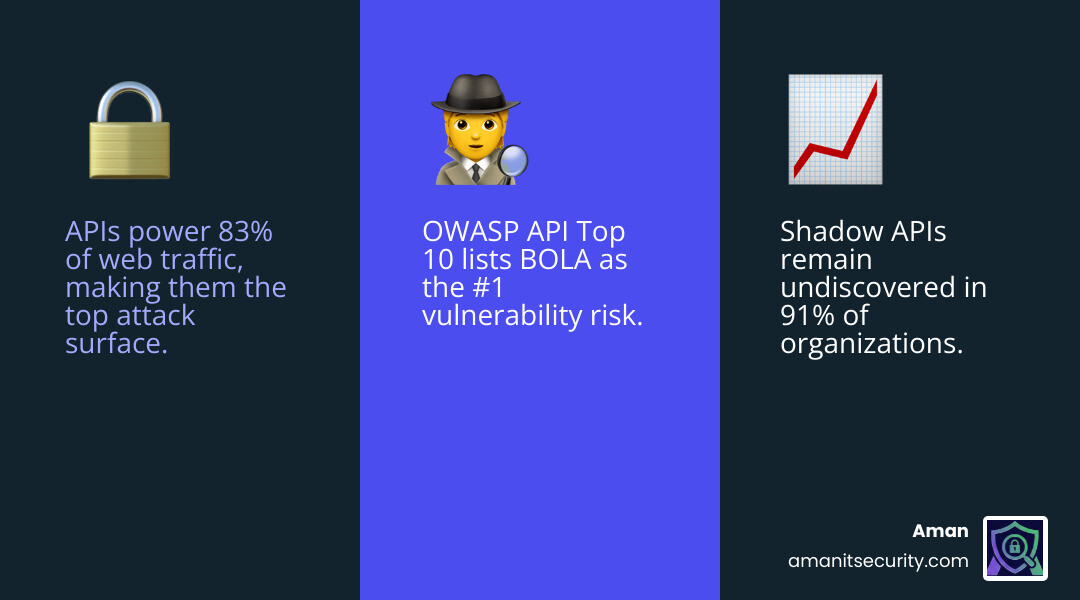
In the early days of the web, security was mostly about protecting the perimeter. You’d put up a firewall, secure your server, and call it a day. But as we’ve shifted toward microservices and cloud-native architectures, the “perimeter” has disappeared. Today, the API is the perimeter.
Gartner warns that APIs have become the primary attack vector for modern applications. This shift has forced a massive evolution in api pentesting tools. We no longer just look for SQL injections; we have to hunt for complex business logic flaws like Broken Object Level Authorization (BOLA).
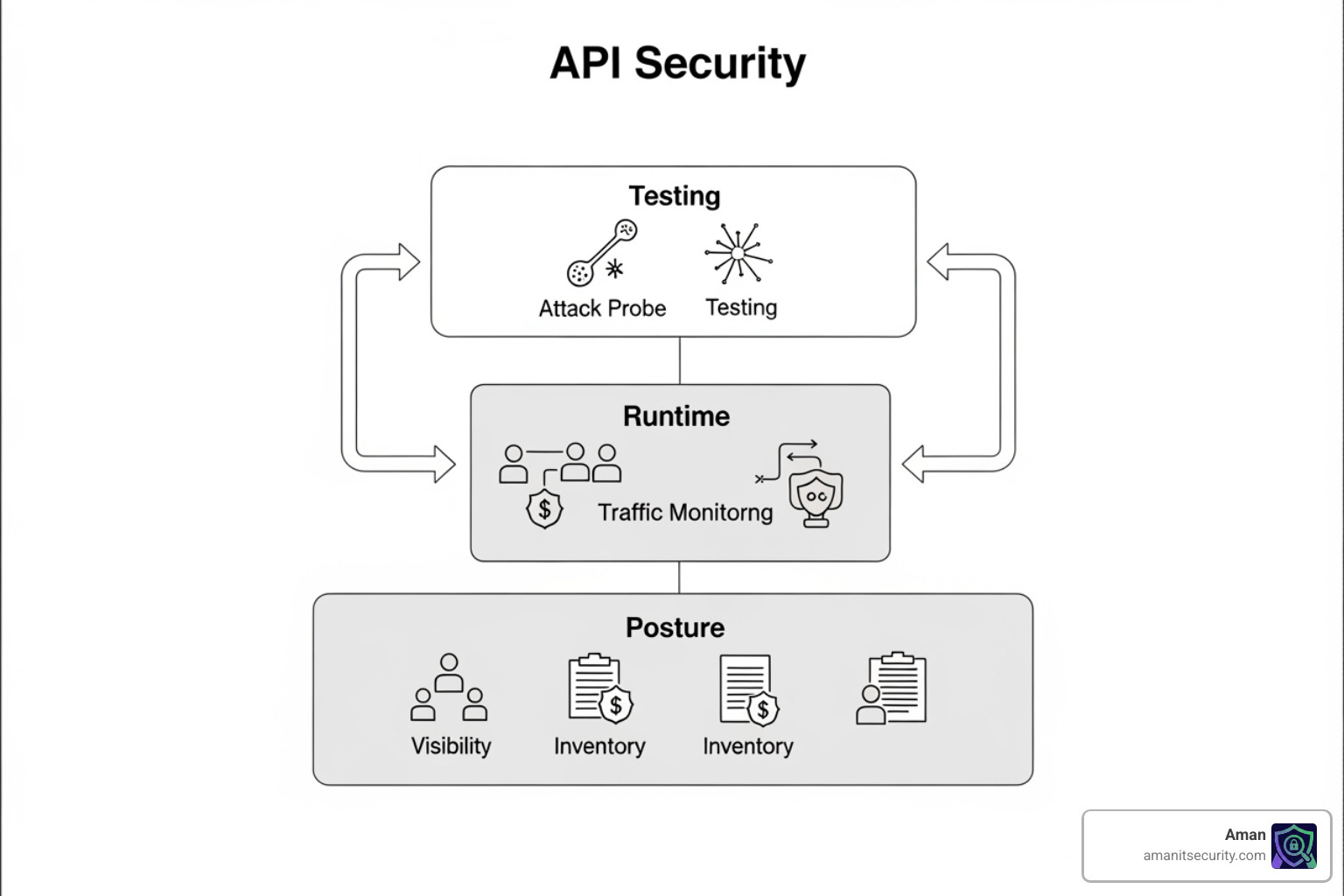
Modern API security is generally broken down into three main categories:
- API Posture Management: This is all about visibility. You can’t secure what you don’t know exists. These tools help with inventory cataloging, identifying shadow APIs, and ensuring your data classification is correct.
- API Runtime Security: These tools act like a specialized WAF. They monitor live traffic to detect and block malicious requests in real-time.
- API Security Testing (DAST): This is where pentesting happens. These tools actively “attack” the API to find weaknesses before a hacker does.
The OWASP API Top 10 provides the roadmap for these tools. They are designed to detect everything from broken authentication to improper assets management. If you want to dive deeper into how this fits into a broader security strategy, check out our guide on web application penetration testing.
Top Open-Source and Commercial Solutions
Choosing between open-source and commercial api pentesting tools is often a balance of budget, time, and the complexity of your environment. Open-source tools offer incredible flexibility and are often the standard for manual testers, while commercial platforms provide the automation and reporting depth that enterprises need to scale.
| Feature | Open-Source Tools | Commercial Platforms |
|---|---|---|
| Cost | Free | Varies (Subscription) |
| Setup Time | Higher (Manual configuration) | Lower (Point-and-shoot) |
| Vulnerability Coverage | Broad, but requires manual tuning | Deep, often includes proprietary databases |
| False Positive Rate | Can be high without expert tuning | Generally lower with mature platforms |
| Reporting | Basic/Technical | Executive-ready & Compliance-mapped |
| Integration | Manual CLI/Scripting | Native CI/CD & Jira integrations |
Essential Open-Source API Pentesting Tools for Developers
If you are just getting started or prefer a hands-on approach, these open-source and community-supported tools are the gold standard.
- Burp Suite (Community Edition): While the Pro version is paid, the free version is still one of the most powerful intercepting proxies available. It allows you to capture and modify API requests on the fly.
- OWASP ZAP: A strong open-source alternative for automated and manual testing. It includes add-ons for API scanning, including support for OpenAPI and GraphQL.
- Postman: Most developers use Postman for building APIs, but it’s also useful for request crafting and basic automated checks.
- Metasploit: A flexible exploitation framework with a large module ecosystem that can support API-related testing workflows.
- Arjun: A must-have for discovery. It helps you find hidden query parameters that aren’t documented but might be vulnerable.
- Kiterunner: Traditional directory brute-forcing doesn’t work well on APIs. Kiterunner is built specifically to discover API endpoints by using wordlists tailored to modern API structures.
- ffuf (Fuzz Faster U Fool): A blazing fast web fuzzer written in Go. It’s perfect for discovering hidden files, directories, and API routes.
- sqlmap: A widely used tool for automated SQL injection testing when API endpoints pass user input into databases.
- mitmproxy: A free and open-source interactive HTTPS proxy. It’s great for reverse-engineering mobile app APIs. You can even use mitmproxy2swagger to turn captured traffic into an OpenAPI specification.
Popular GitHub Fuzzers & Specialized Tools:
- RESTler: A stateful fuzzer from Microsoft Research.
- TnT-Fuzzer: Described as “dynamite for your API,” it uses OpenAPI specs to generate fuzzing payloads.
- Astra: A REST API security testing framework that integrates into the SDLC.
- Cherrybomb: A tool to stop “half-baked” APIs by validating them against your spec.
Leading Commercial Platforms for Enterprise Security
When you need to protect hundreds of APIs across a global organization, you need tools that offer evidence-based reporting and compliance mapping.
- Snyk API & Web: A dev-first platform focused on integrating security testing into the developer workflow.
- 42Crunch: An API security platform that covers the lifecycle from design review to runtime protection.
- Akto: Known for strong API discovery capabilities and broad traffic-source integrations.
- Salt Security: Focuses on API discovery and behavioral detection for attack identification.
- Noname Security: Provides posture management, runtime protection, and active testing capabilities.
- Traceable AI: Uses distributed tracing concepts to understand API behavior and data flows.
- Wallarm: Combines API protection with automated testing features.
- Data Theorem API Secure: Specializes in API inventory and continuous testing.
The right mix often depends on whether your team values customization, automation, reporting depth, or integration speed most.
Protocol-Specific Testing: REST, GraphQL, and SOAP
Not all APIs are created equal. The tools you use for a 20-year-old SOAP service won’t be the same as those you use for a brand-new GraphQL endpoint.
REST APIs
The most common type of API. Testing usually involves fuzzing endpoints and parameters discovered via OpenAPI (Swagger) files. Tools designed for REST often focus on route discovery, parameter tampering, schema validation, and authentication testing.
GraphQL APIs
GraphQL presents unique challenges because it allows the client to define the structure of the response. This can lead to query complexity attacks, where an attacker sends a massive, nested query that crashes the server.
- Introspection: Attackers use introspection queries to ask the API for its entire schema.
- Tools: Extensions and schema-enumeration utilities can help testers map GraphQL endpoints, even when introspection is disabled.
SOAP APIs
While older, SOAP is still heavily used in finance and enterprise settings. It relies on XML and WSDL files. SoapUI remains a widely used option for testing these services, allowing for deep WSDL parsing and security testing of WS-Security headers.
Authentication & Tokens
Regardless of the protocol, you have to deal with authentication.
- JWT testing: Specialized JWT tools can be used for analyzing and modifying JSON Web Tokens during assessments.
- OAuth2 Flows: Modern tools must handle complex OAuth2 flows, including Client Credentials and Authorization Code flows, to perform authenticated scans.
Using AI can significantly speed up the process of understanding these protocols and generating payloads. For more on this, see our article on using AI for penetration testing success.
Integrating Security into the CI/CD Pipeline
The days of the “annual pentest” are over. To keep up with modern release cycles, security must be integrated directly into the DevSecOps pipeline. This is often called “shifting left.”
How to integrate API security:
- Design Phase: Use tools like 42Crunch to audit your OpenAPI specifications before a single line of code is written.
- Build Phase (SAST): Scan your source code for hardcoded API keys or insecure coding patterns.
- Test Phase (DAST): Trigger automated scans using OWASP ZAP or Snyk as part of your Jenkins or GitHub Actions pipeline.
- Remediation Tracking: Ensure your api pentesting tools integrate with Jira or Slack so developers get instant feedback.
For a deeper academic look at how these layers fit together, this presentation by Matt Tesauro is an excellent resource.
How to Choose the Right API Pentesting Tools for Your Enterprise
When we help organizations choose their stack, we look at several key factors:
- Protocol Support: Do you primarily use REST, or are you moving toward GraphQL and gRPC?
- Authentication Handling: Can the tool handle your specific SSO or MFA requirements?
- False Positive Rate: High false positive rates lead to “alert fatigue,” where developers start ignoring security findings.
- Budget: While many great tools are Free, enterprise platforms offer the support and reporting needed for compliance (SOC2, PCI-DSS).
- Manual vs. Automated: No tool can replace a human for finding complex business logic flaws. You need a mix of both.
Real-World Example: We’ve seen cases where automated tools missed a BOLA vulnerability because they didn’t understand the relationship between two different API calls. A manual tester using Burp Suite was able to swap a User ID in a request and access someone else’s private data — a classic example of why tools are only as good as the methodology behind them.
Frequently Asked Questions about API Pentesting
What is the difference between DAST and API pentesting tools?
DAST (Dynamic Application Security Testing) is a broad category of testing that attacks a running application. API pentesting tools are a specialized type of DAST. While a general DAST tool might look for XSS on a webpage, an API-specific tool understands how to parse JSON/XML, handle Bearer tokens, and follow API-specific logic.
Can Postman be used for professional API security testing?
Yes, but with caveats. Postman is excellent for clean API calls and basic automation. However, for deep security testing, such as fuzzing or traffic interception, it is best paired with a dedicated proxy or specialized testing workflow. Some security teams also prefer tools with tighter local-only workflows for sensitive engagements.
How do tools handle complex authentication like OAuth2 and JWT?
Most modern api pentesting tools allow you to configure auth profiles. You can provide the tool with your Client ID, Secret, and Token URL, and it will automatically refresh the token whenever it expires during a scan. For JWTs, specialized token-analysis tools allow you to test for common flaws like insecure algorithms or weak secret keys.
Conclusion
The world of APIs is expanding at a breakneck pace, and your security strategy needs to keep up. Whether you are a developer looking for a Free way to check your work or a CISO building a global security program, the right api pentesting tools are your best defense against modern threats.
At Aman Security, we believe that security shouldn’t be a bottleneck. Our AI-powered platform provides automated penetration testing and vulnerability scanning that is blazing-fast and comprehensive. We don’t just give you a list of problems; we provide instant AI explanations and fix suggestions to help your team move faster and stay secure.
Ready to see where your APIs stand? Visit Aman Security to start your journey toward a more resilient application stack.
Secure Your Apps with Aman
Put these mitigation steps into practice. Get professional-grade vulnerability detection in one place.
Launch Your First Scan Now